-
Services
Challenge We Tackle


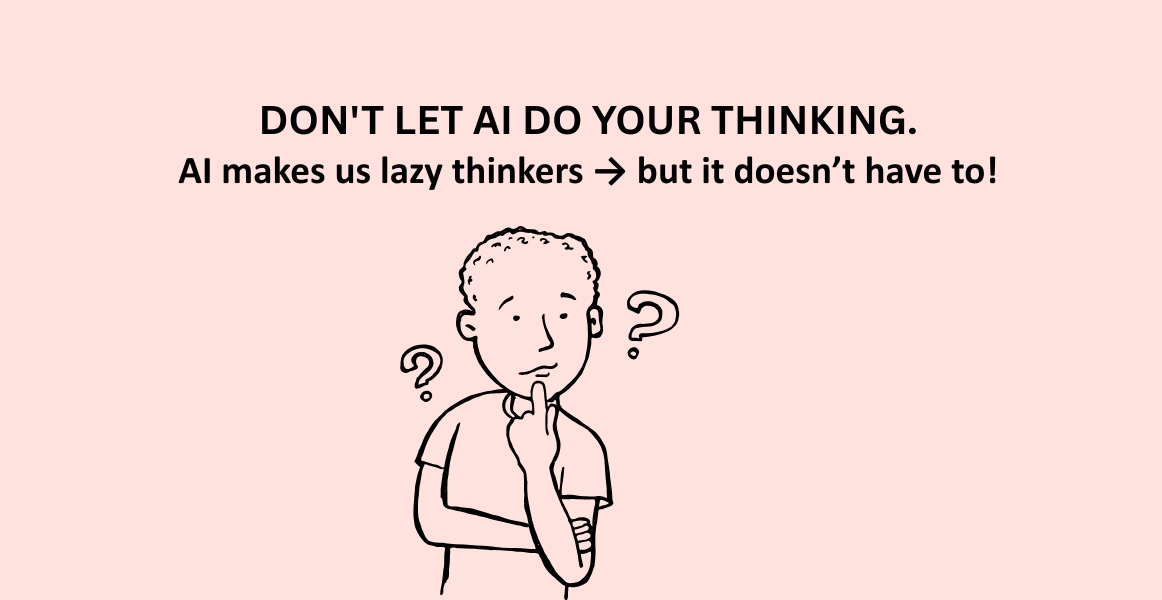
Imagine this: You ask ChatGPT to write a work report. It spits out something perfect in seconds. You hit "send" without reading it. Later, your boss asks about a key detail… and your mind goes blank.
Sound familiar? You’re not alone. An MIT study found 83.3% of people couldn’t remember their AI-written work minutes later. Scarier still? EEG scans show AI users have 47% weaker brain connectivity than those thinking for themselves
The “Lazy Brain” Effect: Just like muscles, brains weaken without exercise. Letting AI handle everything from writing emails to solving problems reduces critical thinking and memory.
Example: Students using AI for homework scored worse on exams without it.
Bias Blindspots: AI mirrors our biases (like assuming CEOs are always men in suits). If we don’t question it, we absorb these stereotypes.
Soulless Sameness: AI content often lacks originality. Researchers found AI-assisted essays were “accurate but soulless,” trapped in an echo chamber.
Before asking AI, think first. Jot down your ideas.
Why it works: Forces your brain to engage, rather than simply copying and pasting.
Use AI for grunt work (research, formatting), NOT deep thinking.
Pro tip: Struggling = brain growth. No pain, no gain!
AI loves recycling popular ideas. Fight back:
Read books AI wasn’t trained on (old novels, niche magazines).
Science says: Moderate AI use doesn’t harm cognition—only overuse does.
AI is a tool, not a boss. As one expert puts it:
The future isn’t humans or AI. It’s humans powered by AI, without losing our spark.