South Korea has long been the envy of the world when it comes to tech. We're talking lightning-fast internet speeds, blanket broadband coverage, and homegrown powerhouses like Samsung, LG, and Hyundai that keep pushing the boundaries of innovation. But here's the harsh reality: that same digital prowess has turned the country into a hacker's playground. In 2025 alone, a relentless barrage of cyberattacks has hit everything from credit card giants to government offices, leaving millions exposed and regulators scrambling. If you're in business, tech, or just worried about your data, this is a wake-up call you can't ignore.
As someone who's followed Asia's tech scene for years, it's heartbreaking to see how these breaches aren't just isolated slip-ups, they're symptoms of a deeper problem. A fragmented government response, a dire shortage of cyber experts, and a reactive mindset are all fueling the fire. Let's dive into what's been happening, why it's so bad, and what might finally turn the tide.
FTC Complaint Against Sendit: Fake Messages, Sneaky Subscriptions, and COPPA Violations
This year has felt like a non-stop cyber thriller, but without the happy ending. From retail chains to telecom behemoths, no one's been spared. Here's a quick rundown of the biggest hits, each one chipping away at public trust and exposing just how vulnerable South Korea's digital backbone really is.
- January: GS Retail's Customer Data Debacle Right out of the gate, GS Retail the folks behind your neighborhood convenience stores confirmed a breach that leaked personal info on 90,000 customers. Hackers struck between December 27 and January 4, swiping names, birthdates, addresses, and emails. It's a stark reminder that even everyday shopping apps aren't safe.
- February: Wemix Blockchain Heist Gaming blockchain Wemix (part of Wemade) lost $6.2 million in a February 28 hack. The kicker? Investors weren't looped in until March 4. In the fast-paced world of crypto and gaming, delays like that can cost way more than just money.
- April-May: Double Trouble for Telecom and Job Hunters Part-time job site Albamon got hammered on April 30, exposing resumes for over 20,000 users including names, phones, and emails. But the real shocker was SK Telecom's massive breach in April, where hackers nabbed data on 23 million customers (that's nearly half of South Korea!).The fallout dragged into May, with millions rushing for new SIM cards. Telecoms are the lifeblood of connectivity when they falter, everything grinds to a halt.
- June: Yes24's Ransomware Nightmare Online ticketing powerhouse Yes24 went dark on June 9 after a ransomware attack. Services were offline for four agonizing days, crippling bookings and sales. It's a classic case of how these attacks don't just steal data they steal time and revenue.
- July: North Korea's AI-Powered Espionage and More Ransomware Chaos The month kicked off with North Korea's Kimsuky group using AI-generated deepfakes to target defense orgs. Then, Seoul Guarantee Insurance (SGI) fell to ransomware around July 14, knocking out critical services like guarantee issuance. Customers were left hanging, and it highlighted how state-sponsored threats are evolving with scary tech like AI.
- August: A Brutal Repeat Offender and Financial Fallout Yes24 struck again with another ransomware hit, this time just hours of downtime but it stung. Worse was Lotte Card's breach from late July to August, leaking 200GB of data affecting 3 million customers. It went undetected for 17 days until August 31. And don't forget Welrix F&I (under Welcome Financial Group), where Russian hackers claimed a terabyte of stolen files, even teasing samples on the dark web. Oh, and Kimsuky was back, spying on 19 foreign embassies via fake diplomatic emails since March.
- September: Telecom Taps and Persistent Phishing KT, another telecom titan, revealed a breach exposing data from 5,500+ subscribers via illegal "fake base stations." Hackers intercepted calls, stole device IDs, and even made sneaky micro-payments. Meanwhile, Kimsuky's AI deepfakes targeted military groups again, per Genians Security Center. It's like the threats are getting smarter while defenses lag.
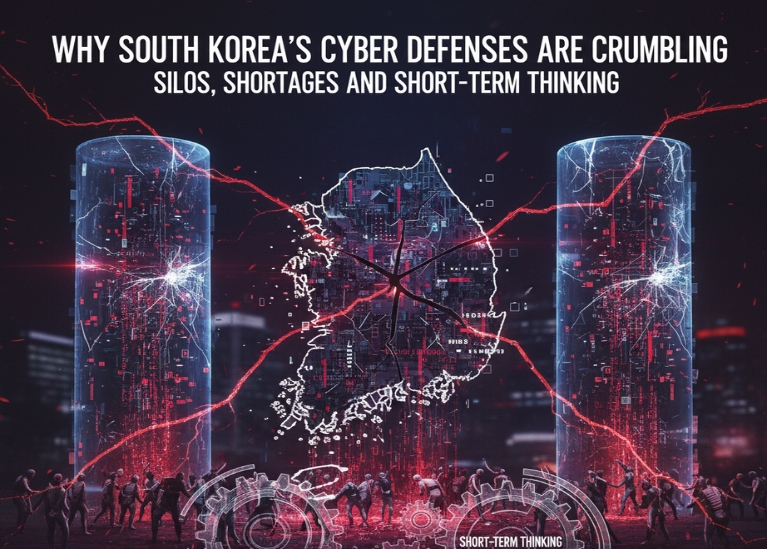
Why South Korea's Cyber Defenses Are Crumbling: Silos, Shortages, and Short-Term Thinkingh
At the heart of this mess? A splintered system where government agencies operate like rival fiefdoms. No single "first responder" steps up after an attack, leading to delayed, disjointed reactions. Critics and experts like Brian Pak, CEO of Seoul-based Theori say it's treating cybersecurity as a fire drill, not a foundational pillar of national security.
Pak, who advises SK Telecom's parent on cyber innovations, pulls no punches: "The government's approach remains largely reactive... Agencies work in silos, so building defenses and training talent gets sidelined." And talent? South Korea's facing a massive shortage of skilled pros. Without them, proactive strategies like AI threat detection or robust employee training stay on the drawing board. It's a vicious cycle: few experts mean weak defenses, which scare off more talent.
Politics isn't helping. Deadlocks breed "quick fixes" post-crisis, while the real grind of long-term resilience (think nationwide cyber education or unified protocols) gathers dust.
A Glimmer of Hope? The Presidential Push for Unity
Finally, some movement. In September 2025, the National Security Office announced a comprehensive interagency plan, led straight from the president's desk. It's aiming for a whole of government vibe, with new laws letting regulators probe hacks even without company reports. Sounds promising for plugging that first-responder gap.
But Pak warns of pitfalls: Handing all power to a presidential control tower could invite politicization and overreach. His fix? A balanced hybrid: A central hub for strategy and crises, backed by independent watchdogs. Let tech-savvy agencies like KISA (Korea Internet & Security Agency) handle the nuts-and-bolts, but with clearer rules and accountability.
The Ministry of Science and ICT echoes the urgency: We're committed to tackling sophisticated threats... to minimize harm to businesses and the public. It's a start, but words need action.
What This Means for Businesses, Citizens, and the Global Tech Scene
South Korea's story isn't just local, it's a cautionary tale for any digital-first nation. If the world's broadband king can bleed data monthly, what's stopping the next target? For companies, ramp up multi-factor auth, regular audits, and cyber insurance. Individuals? Use VPNs, strong passwords, and stay vigilant on phishing (especially those AI deepfakes).
Looking ahead, 2026 could be the year South Korea flips the script investing in talent pipelines, streamlining agencies, and going proactive. Until then, stay sharp. What's your take? Have you been hit by a breach, or do you see hope in these reforms? Drop a comment below. I'd love to hear.
Final Thoughts
For more on global cybersecurity trends, check out our guides on AI in cyber threats and building a resilient business in Asia. Stay safe out there!