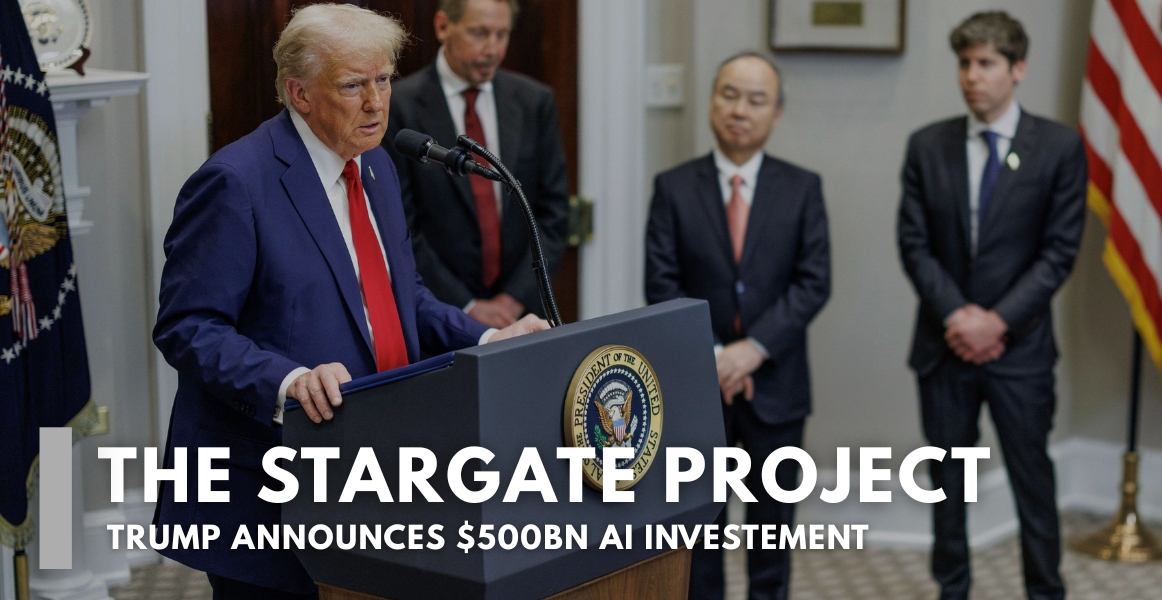
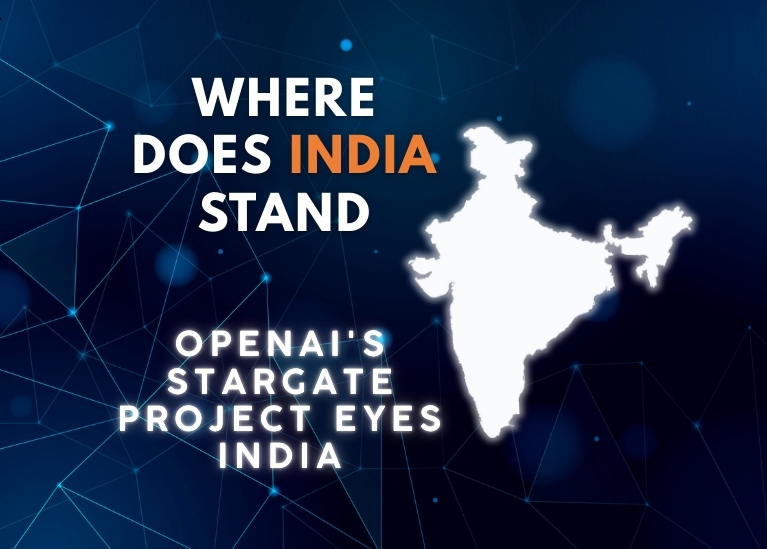
OpenAI, Oracle, and SoftBank shook the AI world with their announcement of five massive new data centers in the U.S. as part of the $500 billion Stargate project. Billed as the Apollo Program of AI, Stargate aims to add nearly 10 gigawatts of computing capacity across the U.S., cementing America’s dominance in artificial intelligence infrastructure. With Nvidia supplying $100 billion worth of GPUs and Microsoft backing OpenAI’s scaling plans, this project is more than just about building data centers—it’s about building the foundation of AI’s future. But here’s the bigger question: How will this reshape the global AI industry? And what does it mean for India’s fast-growing tech ecosystem?
The Global AI Ripple Effect
The Compute Divide Widens
The Stargate project shows us a reality: AI progress is now gated by compute, not just algorithms. Only a handful of players—OpenAI, Google, Anthropic, Meta—can afford access to such massive GPU capacity.
Winners
- U.S. and allied markets that can tap into this infrastructure.
Losers
- Smaller startups and countries without large-scale compute access.
This creates a two-speed AI world: those with compute lead innovation, and those without become dependent users.
AI as National Strategy
By anchoring data centers in Texas, New Mexico, Ohio, and the Midwest, the U.S. sends a message: AI infrastructure is a national defense asset, not just commercial real estate.
- Expect Europe and Asia to fast-track their own AI cloud investments.
- China, already behind in AI chips due to U.S. sanctions, will push harder to create domestic GPU alternatives.
The Rise of Mega Alliances
Nvidia, Oracle, Microsoft, SoftBank, OpenAIStargate shows how AI alliances are consolidating. Smaller independent players may be squeezed out or forced into partnerships.
🇮🇳 Implications for India’s Tech System
1. India’s Compute Gap
India does not yet have hyperscale GPU infrastructure comparable to Stargate. Startups rely heavily on cloud services from AWS, Azure, and Google, which makes scaling frontier models expensive. Without local compute hubs, Indian firms risk becoming service-layer players, not core AI innovators.
2. Opportunities in AI Services
While India may lag in AI infrastructure, it can dominate in AI services and applications:
- Custom AI solutions for enterprises.
- AI-driven automation in healthcare, logistics, and education.
- Leveraging India’s IT outsourcing expertise to deploy and maintain AI for global clients.
3. Chances in Semiconductor & Data Centers
India’s government push on semiconductor manufacturing (Make in India) and data center policies could position it as a regional compute hub. Partnerships with global GPU players could bring localized AI infrastructure. If executed well, India could serve as Asia’s affordable compute hub for smaller startups.
4. Policy Pressure on India
Stargate highlights the geopolitics of AI. For India, this means:
- Faster need to regulate AI responsibly, balancing innovation and ethics.
- Accelerating investment in energy + cloud infrastructure, since 7 gigawatts of data centers also means enormous power requirements.
- Exploring India–U.S. AI alliances under QUAD or Indo-Pacific partnerships to stay in the AI race.
Final Takeaway
India’s Compute Gap: India does not yet have hyperscale GPU infrastructure comparable to Stargate. Startups rely heavily on cloud services from AWS, Azure, and Google, which makes scaling frontier models expensive. Without local compute hubs, Indian firms risk becoming service-layer players, not core AI innovators. Opportunities in AI Services: While India may lag in AI infrastructure, it can dominate in AI services and applications: custom AI solutions for enterprises, AI-driven automation in healthcare, logistics, and education, and leveraging India’s IT outsourcing expertise to deploy and maintain AI for global clients. Chances in Semiconductor & Data Centers: India’s government push on semiconductor manufacturing (Make in India) and data center policies could position it as a regional compute hub. Partnerships with global GPU players cou